
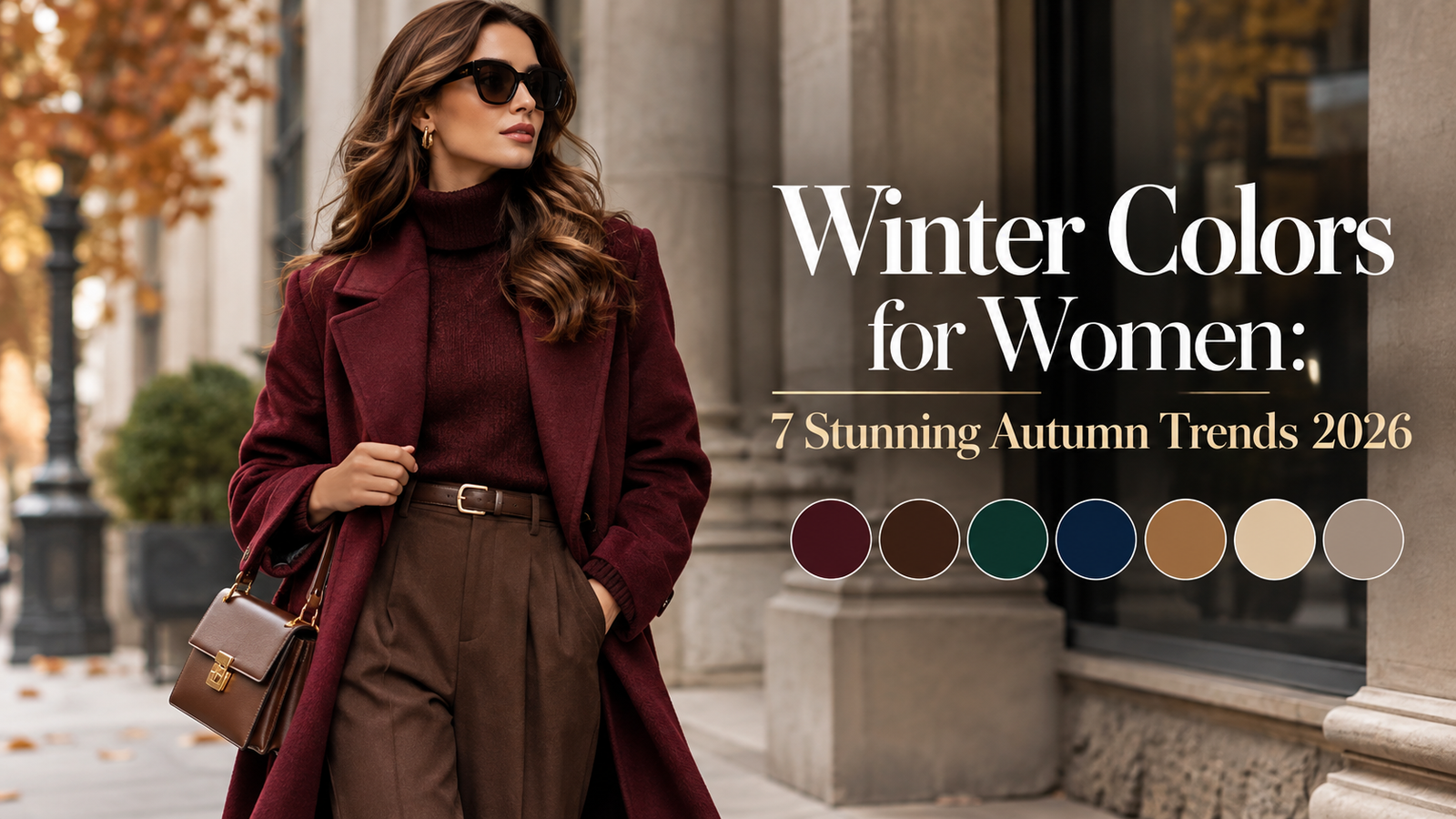
Winter colors, for women are becoming more expressive this 2026 season. Winter colors now include neutrals, jewel tones, icy shades and unexpected accents. Winter colors go beyond the black and gray wardrobe. Current winter fashion shows that camel, deep navy, plum, pink, teal and other saturated shades are popular. Brown, burgundy, olive and cream still link autumn dressing with weather style.
If you want a wardrobe that feels current but is easy to wear the key is balance. Build outfits around versatile base shades. Then add one tone with a coat, knit, skirt, bag, boots or jewelry. This method makes winter fashion colors easier to mix with personal styles, climates and events.
This method makes winter fashion colors easier to adapt to styles, climates and occasions.
7 Stunning Autumn Trends 2026
Below are seven wearable color trends for 2026 and practical ways to style them.
1. Chocolate Brown for a Rich, Modern Base
Chocolate brown is still one of the winter colours to wear in autumn because it feels warm, neat and useful. It looks especially good on wool coats, leather jackets, knits, pants, skirts and boots.
Chocolate brown is an alternative to black for women yet it still looks fancy. For a casual day look pair a chocolate coat with knitwear and dark denim. Use chocolate with burgundy, black or deep plum for evening style.
Brown stays a main colour in the 2026 collection a useful addition, to a wardrobe that moves from autumn to winter.
2. Burgundy for Elegant Winter Looks
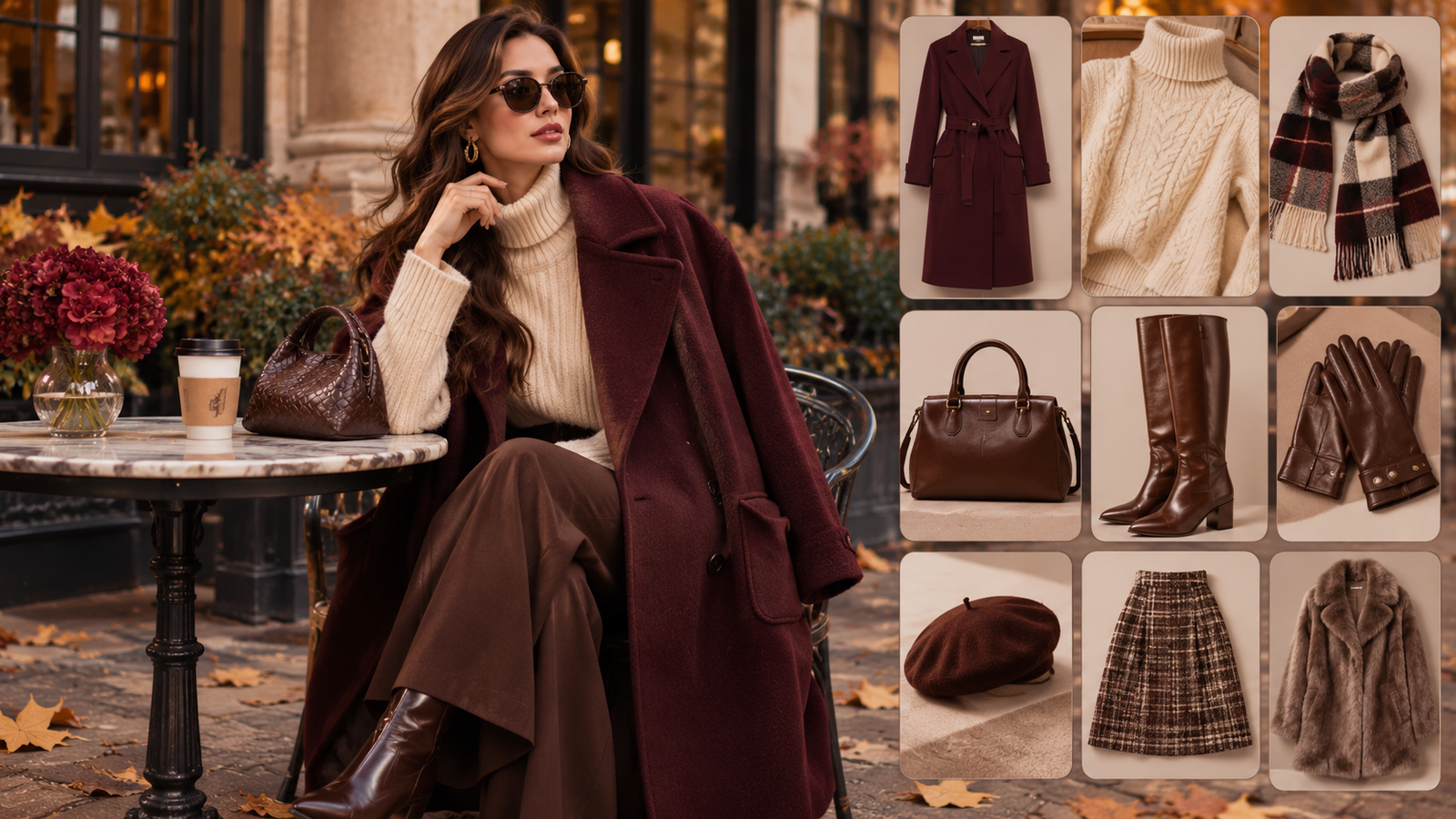
Burgundy has become a choice for winter colors. Burgundy’s deep red tone adds drama. It is not as bright as classic red. Burgundy pairs with everything from oversized sweaters and tailored trousers to evening dresses and handbags.
Burgundy looks especially good with chocolate brown. Burgundy also pairs nicely with cream, charcoal, navy or denim. If wearing a burgundy outfit feels too bold you can bring in burgundy through a handbag, scarf, shoes or lipstick.
For winter clothing trends burgundy works on heavier seasonal fabrics such, as wool, suede, velvet and leather. Burgundy brings richness to these materials.
Your fall wardrobe can already provide a starting point. The Main Fashion fall color guide includes burgundy, chocolate brown, olive, cream, plum and other shades that can transition naturally into colder‑weather outfits.
3. Deep Plum for a Fresh 2026 Update
Deep plum adds tones to the seasonal color choices and gives a fashionable option compared to classic burgundy. Fashion reports for 2026 have shown that plum is becoming a common choice for coats, dresses, trousers, jackets and items you wear.
Among seasonal colors plum is very helpful when you want a bold color that still feels elegant. Wear a plum sweater with trousers or pick a plum coat over a simple cream outfit.
Make sure plum is the color, by using neutral shoes and accessories.
4. Icy Blue and Deep Navy for Cool Contrast
Blue brings an polished look to winter clothing. Deep navy is a choice instead of black and icy blue adds a lighter look that feels very refreshing in cold weather.
For women navy is simple to use in clothes because it goes with denim, gray, white, cream, red wine and brown. A navy wool coat can be an outside layer and an icy-blue sweater can make a dark winter outfit look better.
Using navy with blue creates a difference, without needing big patterns. Put on silver jewelry to finish the look nicely.
C&A’s winter colour guide also identifies navy, midnight blue, ice blue, royal blue, and other cool blue shades as useful within winter-type palettes.
5. Emerald and Forest Green for Depth
Green keeps styling possibilities in cold‑weather wardrobes. Emerald gives an outfit a jewel‑toned finish. Forest green feels more understated and earthy.
These green shades are among the winter colors for women who want something more distinctive than neutral basics. Try an emerald blouse with trousers for an evening look.. Style a forest‑green sweater with straight‑leg jeans, for everyday wear.
Green also pairs naturally with chocolate brown, cream, navy, gray and burgundy. For a look use one green statement piece rather than combining several intense shades at once.
6. Cream and Camel for Quiet Winter Sophistication
Not every seasonal shade has to be bold. Cream and camel are still valuable because they give a base for stronger accents.
Camel is especially useful for coats, tailored trousers, boots and knitwear. Cream works well in sweaters, scarves, skirts and dresses. Together they create a tone that looks polished without excessive styling.
Current Winter 2026 fashion coverage has also highlighted camel and deep navy as choices, for minimal wardrobes. This supports the idea that strong seasonal dressing does not require experimentation.
Try a camel coat over a cream sweater then add burgundy shoes or a plum bag. You can also add chocolate accessories for a warmer effect.
7. Bright Pink and Statement Accents
I think if your wardrobe already holds neutral pieces add a bright accent to give your winter outfits a fresh modern feel. Pink comes in shades from gentle blush to bold fuchsia so you can pick the level of brightness that matches your own style.
I think autumn colors for women usually favor hues but winter fashion lets you play with high‑contrast accents. Pair a pink sweater with dark denim for a relaxed casual look. A pink bag can change a black coat into something lively.
I find that when it comes to trends a bold shade works best if you keep the proportions in check. One bright item against pieces often looks cleaner, than many bright colors fighting for attention.
How to Combine Seasonal Shades Without Overdoing Them
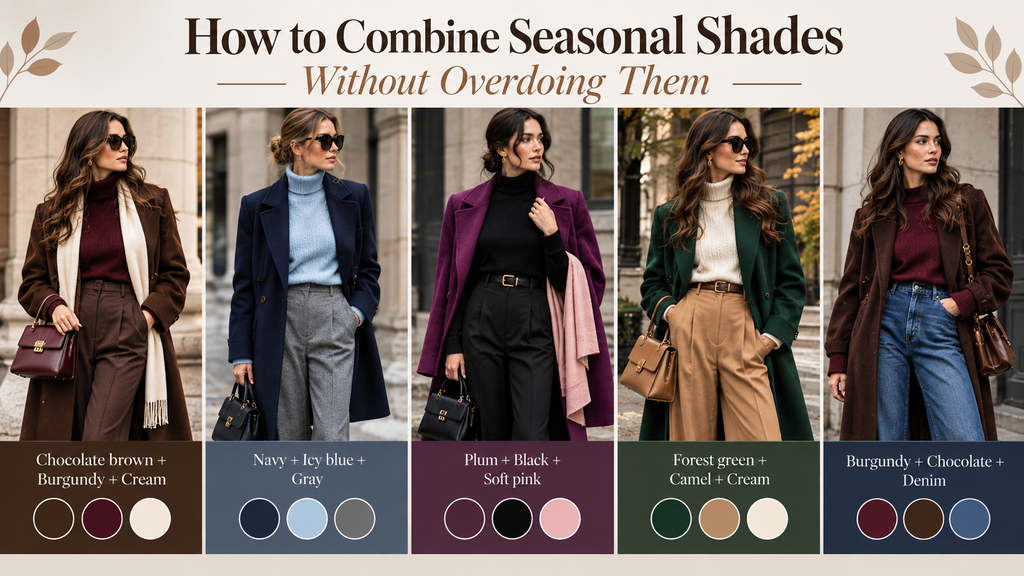
The easiest way to use winter colors is to follow a simple three-part formula: one dominant shade, one supporting color, and one neutral.
For example:
- Chocolate brown + burgundy + cream
- Navy + icy blue + gray
- Plum + black + soft pink
- Forest green + camel + cream
- Burgundy + chocolate + denim
This method gives your outfit visual structure while leaving room for accessories and textures.
You can also use the 60-30-10 approach: let the dominant color cover most of the outfit, use a secondary shade for roughly one-third, and reserve the smallest portion for an accent.
How to Choose the Right Winter Colors for Your Skin Tone
Personal color preferences matter more than trying to follow every trend.. Color analysis can still be useful. It helps you see which shades create the contrast you enjoy.
C&A’s guide splits winter color analysis into three types: deep and bright winter. It says that cool winter palettes often feature blues, cool reds, emerald or pine greens, black, white and cool gray. Deep and bright winter palettes allow for combinations of strong and contrasting shades.
Use color analysis as a guide. Always pick colors that feel right for you. Choose shades that make you feel comfortable and confident. As the seasons transition, many of these shades overlap with popular autumn palettes. For more ideas, explore our guide to fall colors for clothes and discover stylish color combinations for 2026.
If you’re not sure where to start go with a coat or trousers. Then test colors, near your face using sweaters, scarves or tops. That way you can see what works best without committing to anything.
Are Autumn Winter Colors the Same?
Autumn palettes and winter palettes overlap, yet each set can stay unique. I find that Autumn styles often highlight warmth with colors such as brown, olive, rust, camel, cream and burgundy. Winter outfits can keep many of those tones. They also add cooler or stronger shades, like navy icy blue, plum, emerald and bright pink.
That makes dressing for the transition easier. I think you can keep your Autumn pieces and adjust the overall mood by adding cooler accessories and heavier winter textures.
An olive jacket can pair nicely with a cream knit and dark denim while a burgundy skirt can transition into winter with a navy sweater and boots.
Final Thoughts on Winter Color Trends 2026
A strong winter wardrobe doesn’t mean you have to buy every trend. Focus on colors that match the clothes you already have.
Think about shades like chocolate brown, burgundy, deep plum, navy icy blue, emerald, forest green, cream, camel and statement pink. These colors give you lots of options to build outfits. They work well for wear, office looks, travel styles and even evening outfits.
The best chance, for 2026 is to experiment with balance. Start with one neutral color. Add one seasonal shade. Then finish with a controlled accent. That simple idea can make your wardrobe feel fresh and updated. At the time every outfit stays easy to wear.
FAQs
What are the most popular winter colors for 2026?
Popular winter color directions for 2026 include chocolate brown, burgundy, deep plum, navy, icy blue, emerald, camel, cream, and brighter statement shades such as pink.
What are the best winter colors for women?
The best winter colors for women depend on personal style and preferred contrast. Navy, burgundy, chocolate brown, cream, plum, forest green, and camel are versatile starting points.
Are winter colors always dark?
No. Winter outfits can include icy blue, cream, pink, white, and other lighter or brighter shades. Combining a light shade with a deep neutral creates strong seasonal contrast.
How can I wear winter colors without buying new clothes?
Start with accessories. A burgundy bag, plum scarf, emerald sweater, or navy coat can refresh existing neutral pieces without requiring a completely new wardrobe.
One thought on “Winter Colors for Women: 7 Stunning Autumn Trends 2026”