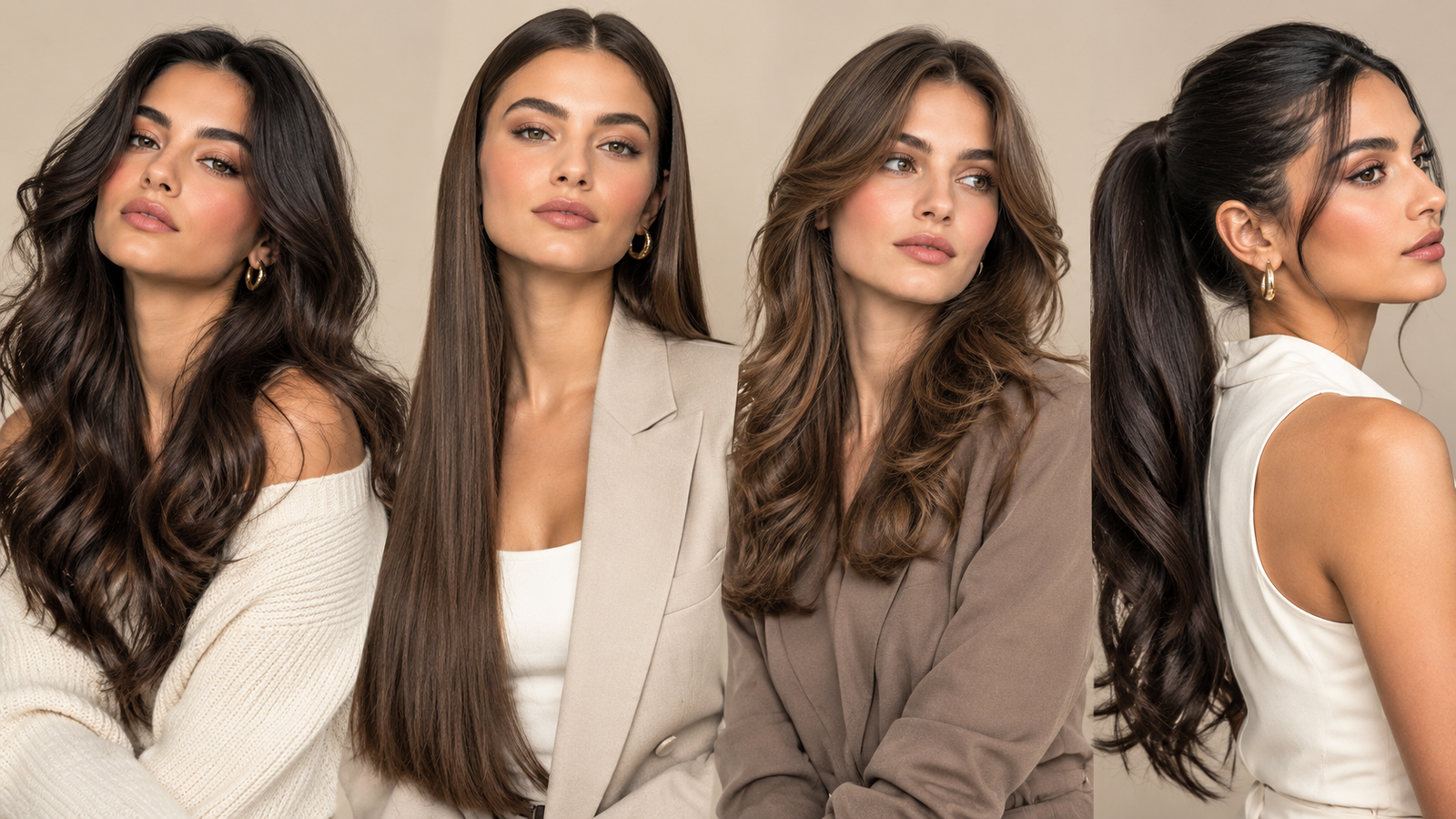
If your hair always seems to act in a way you don’t like the issue might not be your routine. You might just be using products and ways of styling that don’t fit your pattern. Learning about hair types gives you a place to start when picking shampoos, conditioners, styling products, cuts and habits that protect your hair.
Different hair types react to moisture, heat, brushing and styling in ways. Some hair needs moisture while other hair gets better results from thicker products and taking care to keep moisture in. Your pattern can also change because of humidity, chemical treatments, heat damage getting older and how you style your hair.
The positive thing is that figuring out your pattern doesn’t have to be hard. This guide explains the groups, the 1A, to 4C system and easy ways to learn about your own texture.
What Are Hair Types
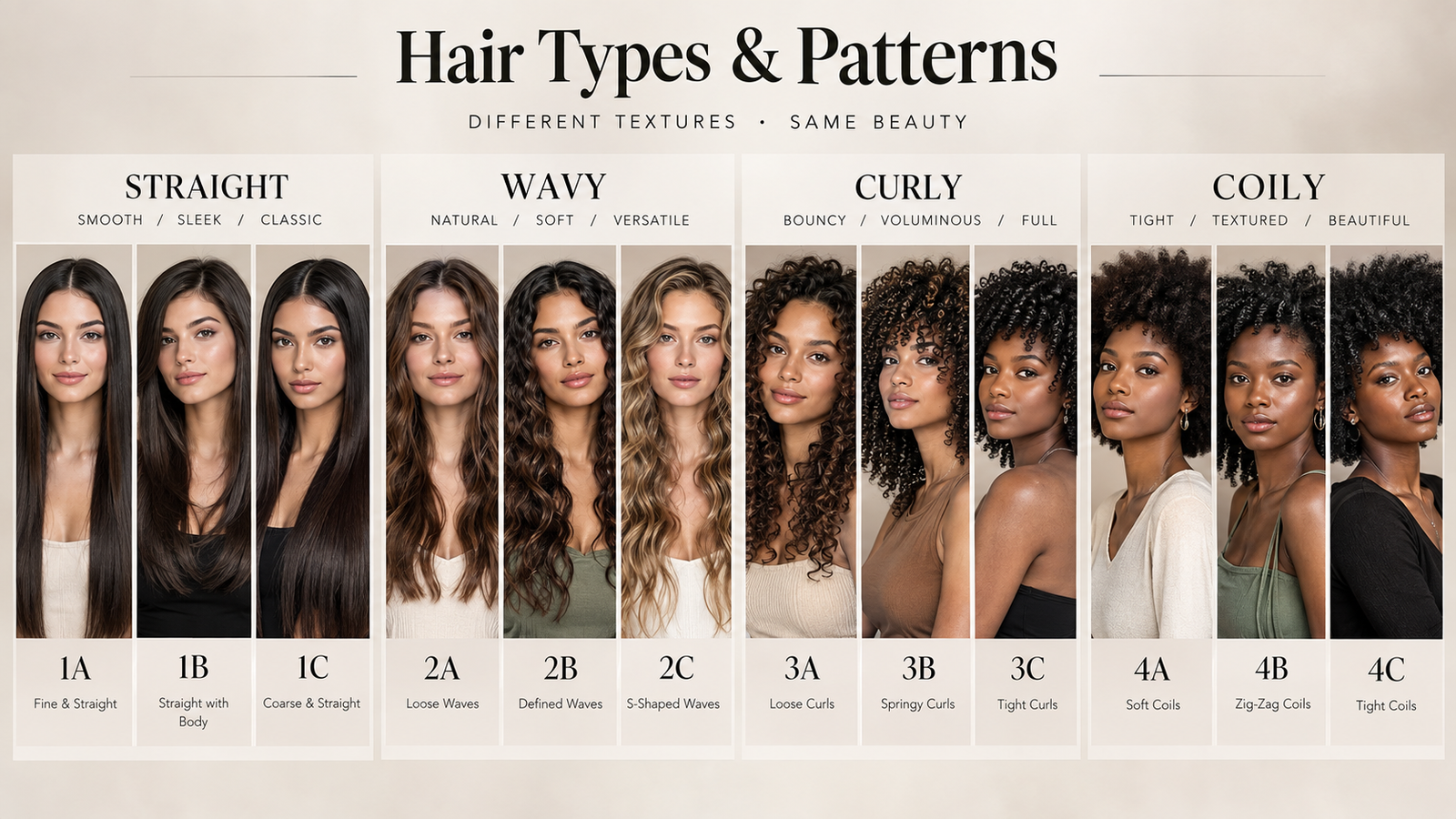
Hair type tells you how your hair naturally looks. The usual way to sort hair is, into four groups: Type 1 straight Type 2 wavy, Type 3 curly and Type 4 coily.
These groups help you see how your hair naturally forms. They do not define beauty. They do not decide which styles you can wear. Instead they give you a guide to create a routine that matches your hair’s behavior.
A hair type chart usually splits each group into three subcategories. The number shows the pattern while the letter A, B or C tells you how loose or tight that pattern looks.
The Four Main Hair Types
Type 1 Straight Hair
Straight hair generally falls from the roots without a visible wave or curl. It can look smooth and reflective because the natural oils from the scalp can travel down the strand more easily.
1A hair type is very straight and fine, with little natural volume. 1B hair type usually has more body while remaining straight. 1C hair type tends to be straighter with more thickness and may show slight bends.
Straight hair can become oily quickly because sebum can move along the strand efficiently. Lightweight shampoos and conditioners can help prevent buildup without making the hair feel heavy.
Type 2 Wavy Hair
Wavy hair forms bends or loose S‑shaped patterns of staying completely straight. This group sits between curly textures. I have noticed that wavy hair feels natural and easy to style.
2A hair type has a loose wave and often responds well to lightweight styling products. 2B hair type creates defined waves, particularly around the middle and ends. 2C hair type has waves that can approach a loose curl.
Wavy hair can lose definition when you apply much product. Scrunching damp hair, with a mousse or gel can help enhance the natural pattern.
Type 3 Curly Hair
Curly hair makes loops, spirals or ringlets. Curly hair often needs moisture management. Curly hair bends can stop oils from moving from the scalp to the ends.
3A hair type usually creates loose curls. 3B hair type produces curls with more volume. 3C hair type has densely packed curls that can become dry and tangled.
People, with hair often benefit from gentle cleansing, regular conditioning and less heat styling. Detangling with conditioner and a wide‑tooth comb can help reduce breakage.
Type 4 Coily Hair
Coily hair creates curls, coils or zigzag shapes. It can shrink a lot when it dries so the actual length might look shorter than when its stretched.
4A hair type usually makes defined small coils. 4B hair type has a tighter, not, as pattern that might look more angular or zigzag. 4C hair type has very tight coils or bends and might not show much curl definition without some work.
Coily hair can do well with lots of conditioning, gentle combing, protective styles and regular water. Keeping away from much pulling and using too much heat can also keep the strands healthy.
Hair Types and Textures Are Not the Same Thing
Many people treat hair type and hair texture as if they are the same. They can point to different qualities. Hair type usually points to how a strand looks, like straight, wavy, curly or coily.
Hair texture can refer to how thick or thin a single strand is, often called fine, medium or coarse. Two people may have the curl pattern yet have different strand thicknesses, density, porosity or moisture needs.
That is why a hair type chart should act as a starting point, not a diagnosis of your hair. Your ideal routine relies on factors and knowing hair type can help you pick better products.
How to Identify Your Hair Type
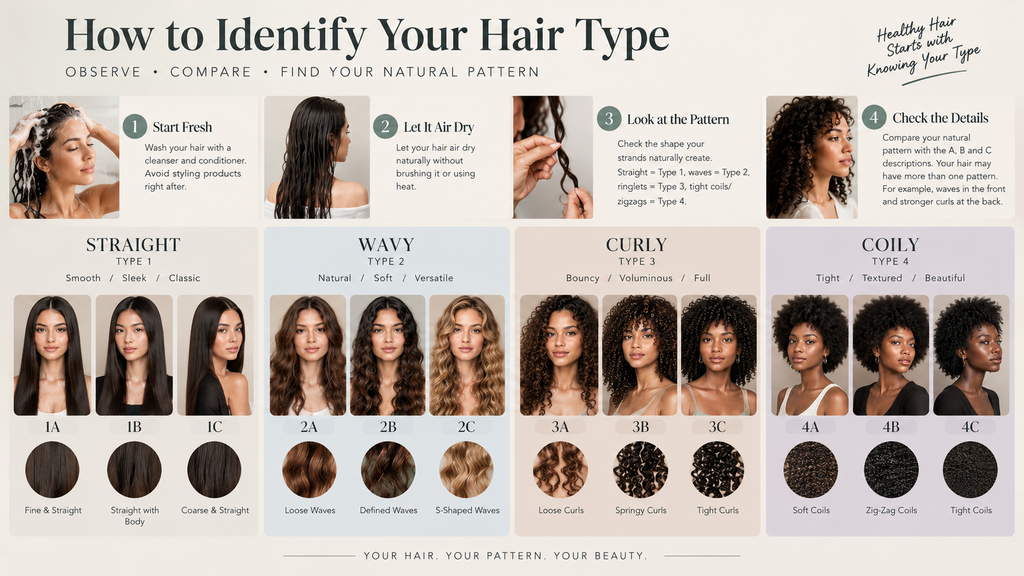
The easiest way to identify your pattern is to look at your hair without trying to style it. Looking closely at your hair types can help you avoid picking products that rely only on marketing claims.
Start by washing your hair with a cleanser and conditioner. Avoid styling products right after. Let your hair air dry without brushing it or using heat.
Look at the shape that your strands naturally create. If they stay straight you likely have Type 1 hair. If they form waves you see Type 2. Visible ringlets usually show Type 3 while tight coils or zigzag shapes usually show Type 4.
Then compare your natural pattern with the A, B and C descriptions. Remember that your head may hold than one pattern. For example you might see waves near the front and stronger curls at the back.
You can also compare your natural pattern with professional descriptions of different hair types. A useful reference is this guide to different types of hair, which can help you understand the visual differences between common patterns.
How Your Hair Type Can Affect Your Routine
Once you know your pattern pick products based on how your hair acts of just buying things that say they are for a certain type. This way hair types become something to use instead of something that limits you.
Straight hair might need to be washed often if the scalp gets oily fast. Wavy hair usually needs water to stop frizz without making the waves disappear. Curly hair generally gets better from being wet. Treated softly. Coily hair often requires a lot of water to stay soft to untangle easily and to avoid damage, from being handled much.
Your haircut matters too. The right cut can help your natural pattern look intentional and balanced. If you have long hair, you can also explore practical styling ideas in this guide to hairstyles for long hair.
Common Mistakes When Identifying Hair Types
One common mistake is judging your hair pattern after using heat tools. Straightening can make waves, curls or coils look flat for a while which makes it hard to see what your natural texture really is.
Another mistake people make is putting much product on their hair before checking how it behaves naturally. Thick creams, oils, gels or any products with silicone can change the way your hair moves and falls making it harder to understand its behavior.
Some individuals only pay attention to curl pattern. Forget about other important features like strand thickness, hair density, porosity and scalp health. These things matter because they affect how your hair reacts to products. That’s why two people, with hair types might need completely different routines.
Finally don’t think your hair has to fit into just one category. Mixed patterns happen all the time. Your hair can look totally different depending on how long it’s how much moisture it has, the weather outside or what you did with it recently.
Frequently Asked Questions
What are the main hair types?
The four main hair types are straight, wavy, curly, and coily. The system commonly identifies them as Type 1, Type 2, Type 3, and Type 4, with A, B, and C subcategories.
How do I know my hair type?
Wash your hair, avoid heat and heavy styling products, and let it dry naturally. Observe whether it stays straight, forms waves, creates curls, or develops tight coils. Then compare the pattern with the 1A to 4C descriptions.
Can my hair have more than one type?
Yes. Many people have different patterns across their scalp. You may also see changes after growing your hair longer, cutting it shorter, using chemical treatments, or changing your routine.
Does hair type determine which hairstyle I can wear?
No. Hair type can help you understand how a style may behave, but it does not limit your styling choices. Proper technique, products, haircut design, and hair health all matter.
Why does my hair type look different in different weather?
Humidity can make some hair patterns swell, frizz, or lose definition, while dry conditions can increase roughness and moisture loss. Your routine may need seasonal adjustments, especially when your hair types react differently to changes in moisture and humidity.
How often should I change my hair routine?
You do not need to change your routine simply because a chart places your hair in a different category. Adjust products when your scalp or strands show a real need, such as excessive dryness, buildup, frizz, or breakage.
Final Thoughts
Learning about hair types can make your beauty routine more practical. Of copying someone else’s products or styling method you should start with your natural pattern. Then look at strand thickness, density, porosity and what your scalp needs.
The 1A, to 4C system gives you a way to talk about texture.. Your hair doesn’t have to fit perfectly into one category. Watch how your strands behave. Keep your consistent. Adjust your products when your needs change.
The best approach is not to chase a category. It is also not to compare your hair type to someone ’s. It is to understand your texture. Use that knowledge to build a routine that keeps your hair healthy, manageable and easy to style.