
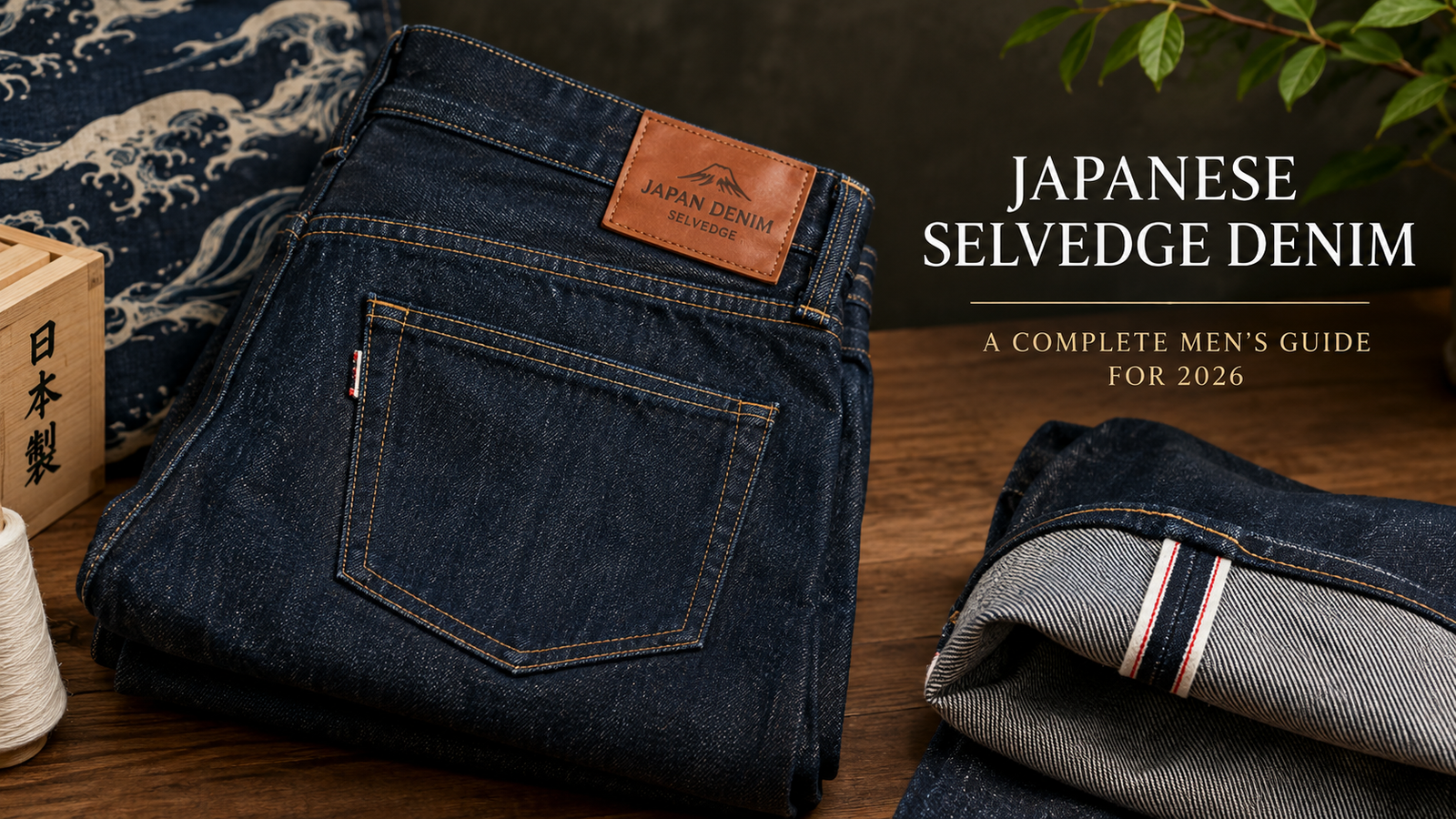
If you’re a fan of male fashion, then you’ve probably encountered the phrase Japanese selvedge denim. It typically is more expensive cost than regular jeans, however, there’s a valid reason why denim lovers are willing to spend money on it.
Japanese selvedge jeans are renowned for its traditional weave techniques distinct texture, deep indigo hue, and the ability to create unique fades through normal wear. Contrary to mass-produced jeans, a lot of Japanese denim producers focus on the construction of their fabrics the dyeing process, workmanship, and the long-term character.
What is it that does it make Japanese selvedge jeans different? Do you think it is worth the cost? How should you wear it and take care of it?
Here’s what you should be aware of before purchasing that first pair.
What Is Japanese Selvedge Denim?
Japanese selvedge jeans is a denim fabric that is produced in Japan by traditional weaving techniques. It is usually made using narrow shuttle looms. The word “selvedge” comes from “self-edge,” refers to the edge that is created naturally when weaving.
Since shuttle looms weave a rather thin piece of fabric, edges is finished without the same kind of cutting and overlocking as is required with the majority of modern denim fabrics. When you cuff or roll the seams of a pair of selvedge denim typically, you will see an even strip running across the outside seam.
The visible edge is often known as”the selvedge identification.
The color of the line that is visible along the edge could be red, however it could also be other colors, depending on the manufacturer or mill. The color is not a guarantee of whether the jeans are of good quality.
Japanese selvedge denim is now especially admired due to the fact that Japanese producers incorporated traditional machinery with meticulous process of developing the fabric techniques for dyeing, meticulous workmanship.
Why Is Japanese Selvedge Denim So Popular?
There are a variety of factors Japanese denim has earned such a reputable reputation with men’s fashion lovers.
1. Traditional Shuttle Looms
One of the main features of selvedge fabric is the utilization of shuttle looms.
They operate slower than the modern high-speed looms, and create a more narrow fabric. This slower process of production can result in the distinct appearance and texture that jeans fans love.
The result isn’t always a uniformly-colored fabric. However, certain Japanese denim is characterized by subtle variations, which give it more authentic, tactile appearance.
2. Deep Indigo Color
Japanese denim, also known as Japanese jeans is famous for its deep indigo hues.
Many of the top fabrics utilize rope-dyeing techniques where yarns of cotton are treated to dye. The exterior of the yarn is colored, while the interior remains relatively light.
When jeans are washed, worn, and subjected to friction, the inner indigo fades away. This causes contrasts of lighter blue. This creates wrinkles and fades, which are what make worn jeans so distinct.
3. Unique Texture
Japanese selvedge jeans can be distinguished by a distinct feel than jeans that are lightweight and mass-market.
Based on the fabric you may come across terms such as slubby hairy, neppy or irregular. These are terms used to describe various sensory and tactile qualities generated by the yarn weave, and the finishing process.
For those who love denim These details are a part of the charm.
Japanese Selvedge Denim vs. Regular Denim
At first glance at first glance, a pair of Japanese selvedge jeans won’t appear very different from normal jeans. The distinction becomes clearer to comprehend when you consider how the fabric is created.
Regular denim is typically made on modern, wide weaving machines that produce huge quantities of fabric rapidly. Selvedge denim is typically produced on shuttle looms with narrower widths which work slower.
This means that selvedge production may take longer and require more management.
It is, however, important not to believe that every selvedge jeans is superior to every non-selvedged jean..
Selvedge is the term used to describe the fabric’s edge. It cannot instantly reveal the amount of weight, quality of cotton or stitching, but it does tell you the fit or the overall quality of the garment. A variety of factors contribute in determining the overall quality the jeans.
Japanese Selvedge Denim vs. Raw Denim
Both terms are frequently confused, yet they refer to two different aspects.
Selvedge denim is the method by which the fabric is weaved and finished along its edges.
Denim that is raw Also known as dry denim, refers denim that hasn’t been cleaned or processed extensively after its production.
It means you could have:
- Raw denim and selvedge
- The wash and selvedge of the denim
- Raw and non-selvedge denim
- Denim that is washed and non-selvedge
The jeans or pair of Japanese selvedge jeans may be washed, raw or finished prior to getting to the buyer.
Knowing this distinction will make it easier to look for the kind of denim you need.
What Makes Japanese Denim Different?
Selvedge denim’s history in Japan is inextricably linked to the past of American denim.
Following World War II, American jeans began to become more fashionable in Japan. While denim production in United States modernized, older shuttle looms that were narrow began to disappear. Japanese manufacturers gathered some of these machines and created their own knowledge of traditional production of denim.
In the course of time, Japanese craftspeople didn’t simply recreate the old denim. They tried weaving yarns, dyeing fabrics as well as finishing methods.
It was the result that created a denim-based culture that was renowned throughout the world due to its meticulous attention to detail. Japanese manufacturing of denim is especially connected to areas like Kojima in Okayama which is one of Japan’s most famous denim-producing regions.
Why Does Japanese Selvedge Denim Cost More?
The most frequently asked query asks: Why are Japanese selvedge jeans so costly?
The answer isn’t simply branding.
Traditional shuttle looms make fabrics more slowly than modern industrial weaving looms. They also require expert maintenance and highly skilled operators. Premium denim could also require careful selection of cotton, special dyeing, thicker fabric, precise construction as well as more labour-intensive quality controls.
Certain Japanese selvedge jeans are also made of especially heavy or intricate fabrics that require additional knowledge to make.
If you are paying more, you’re usually paying for a mixture of production time, fabric development as well as the production on a smaller scale.
Of course, price alone doesn’t guarantee quality. Be sure to consider the material and construction, fit and reputation of the maker instead of thinking that the highest priced pair is necessarily the best.
How Should Men Wear Japanese Selvedge Denim?
The greatest aspect of Japanese selvedge denim is the flexibility.
You can create a basic everyday outfit without making the denim style excessively formal.

To get a classic casual appearance Try:
- Dark indigo selvedge jeans
- A simple gray or white T-shirt
- Boots or leather sneakers
- A light jacket
To create a more sophisticated look make sure to pair dark selvedge jeans and an Oxford shirt, a t-shirt or a more an edgy jacket.
If you’re a fan of casual streetwear, a more spacious pair of jeans can be worn with a bulky T-shirt casual sneakers and an overshirt.
The key to balance is. Denim is the basis of your outfit instead of adding excessively competing pieces.
For more ideas take a look at this guide on casual footwear for men that you can pair with jeans when you are selecting the right footwear for your jeans outfits.
Can You Wear Selvedge Denim With Cargo Trousers?
You don’t typically wear cargo pants and jeans in the same outfit however both items are suitable for a casual outfit.
If you’re looking to create a versatile male clothing, Japanese selvedge denim can be a classic well-constructed option, and cargo pants provide an informal alternative.
When you’re switching between them make sure to keep your other outfits basic. neutral T-shirts, overshirts casual shoes, and boots work for both looks.
Also, check out our article on ways to style cargo pants for more outfit ideas.
How Should You Care for Japanese Selvedge Denim?
Good jeans don’t require a lot of care, but it can need a little care.
If you have raw Japanese selvedge jeans the first thing you need to be aware of is how washing has an effect on the appearance as well as fades.
Certain denim lovers hold off on washing their first pair due to the desire for a stronger shades of contrast. But, there’s no universal norm that everyone must follow.
Instead, think about what you do with jeans, the degree to which they have gotten dirty are, the manufacturer’s recommendations and how you’d like the look of your jeans.
If washing is required adhere to the care guidelines that are included in your jeans. Avoid unnecessary harsh treatment and allow your denim to dry completely after washing.
The most important thing is to not be afraid to put on your jeans.
The denim’s distinctive character is derived from wear and tear. Fading, scratches, and a few signs of wear are part what makes a good pair personal.
Are Japanese Selvedge Jeans Worth It?
For many males, Japanese selvedge denim is well worth the cost because it provides something more than a basic set of denim.
You’re buying a different fashion of clothing, one that places more emphasis on fabrics structure, texture, and the long-term wear.
But that does not mean that everyone should have to buy a pair of jeans that cost $200+.
If you’re looking for comfortable jeans for everyday wear and don’t worry about texture or fade an affordable pair of jeans might be better.
However, if you are a fan of the traditional style of menswear and prefer jeans that will develop personality as the wearer, Japanese selvedge denim can be a wonderful option to add to your wardrobe.
How to Choose Your First Pair
If you’re purchasing Japanese selvedge jeans for the first time, do not concentrate just on the words “Japanese.”
Pay close attention to the following points:
The fit: Choose a cut that is a good fit for your body and your personal style. Slim, straight tapered, loose, and comfortable styles can be a good fit.
Weigh: Heavy denim can appear impressive, but it can make it uncomfortable for newcomers. A lighter fabric is more comfortable to wear frequently.
Rise Think about whether you would prefer a lower, mid or higher rise, according to how you typically wear your pants.
Color: Deep indigo is an extremely versatile base color and is a great match for everything from t-shirts and smart casual T-shirts.
Fabric Examine the weave fabric, texture, cotton and the finishing, instead of simply relying upon the name of the company.
Structure: Check stitching, pockets, rivets, buttons and overall final.
It’s important to choose the clothes you’d like to wear. A pair of great jeans sitting unworn in your closet won’t do anyone any favours.
Final Thoughts
Japanese selvedge jeans gained its fame thanks to a blend of traditional weaving techniques, expert craftsmanship distinct fabrics, and an enduring tradition of experimentation with denim.
It’s not only about putting a Japanese brand on jeans. The most appealing aspect is the pleasure of wearing well-made denim which can alter in look with time.
From deep indigo hues through personalised fades and textured fabrics the right pair of clothes can become more intriguing the more you wear it.
Men who appreciate good quality clothes and thoughtful selection of clothes, Japanese selvedge denim is more than just another pair jeans. It’s a menswear piece that is designed to tell its own narrative with you.
Frequently Asked Questions
What exactly is Japanese Selvedge jeans?
Japanese selvedge denim is made in Japan with traditional weaving techniques. It is usually woven on shuttle looms that are narrow. It is renowned for its edge-to-edge finish unique texture, as well as the craftsmanship.
Are Japanese selvedge denim more comfortable than regular denim?
It could offer greater levels of craftsmanship as well as distinctive features of fabric, but selvedge doesn’t necessarily mean higher quality in all areas. Fabric, fit construction, and quality are all factors.
Is Japanese selvedge denim always raw?
No. Raw and Selvedge have distinct features. Selvedge refers to the fabric’s construction, whereas raw denim is not subject to distressing or washing.
What is the reason Japanese selvedge jeans so expensive?
Traditional shuttle looms are slow and require more expert attention than modern high-speed looms. The use of high-end materials and a precise construction can increase the costs of production.
Does Japanese selvedge denim fade?
Yes, especially indigo jeans. When worn regularly friction, it gradually strips away some of the dye on the surface and produces a unique fade. The exact pattern of fading is determined by the fabric you wear and the way you style it.
How long do Japanese jeans made of selvedge last?
A good pair of jeans can last for a long time with proper care, wear, and repairs. The durability of the fabric is determined by design, the construction, regularity of wear and the manner in which jeans are kept.